Introduction
What is a polymer
Plastics are made of materials called polymers. Can you think of any examples of plastics?
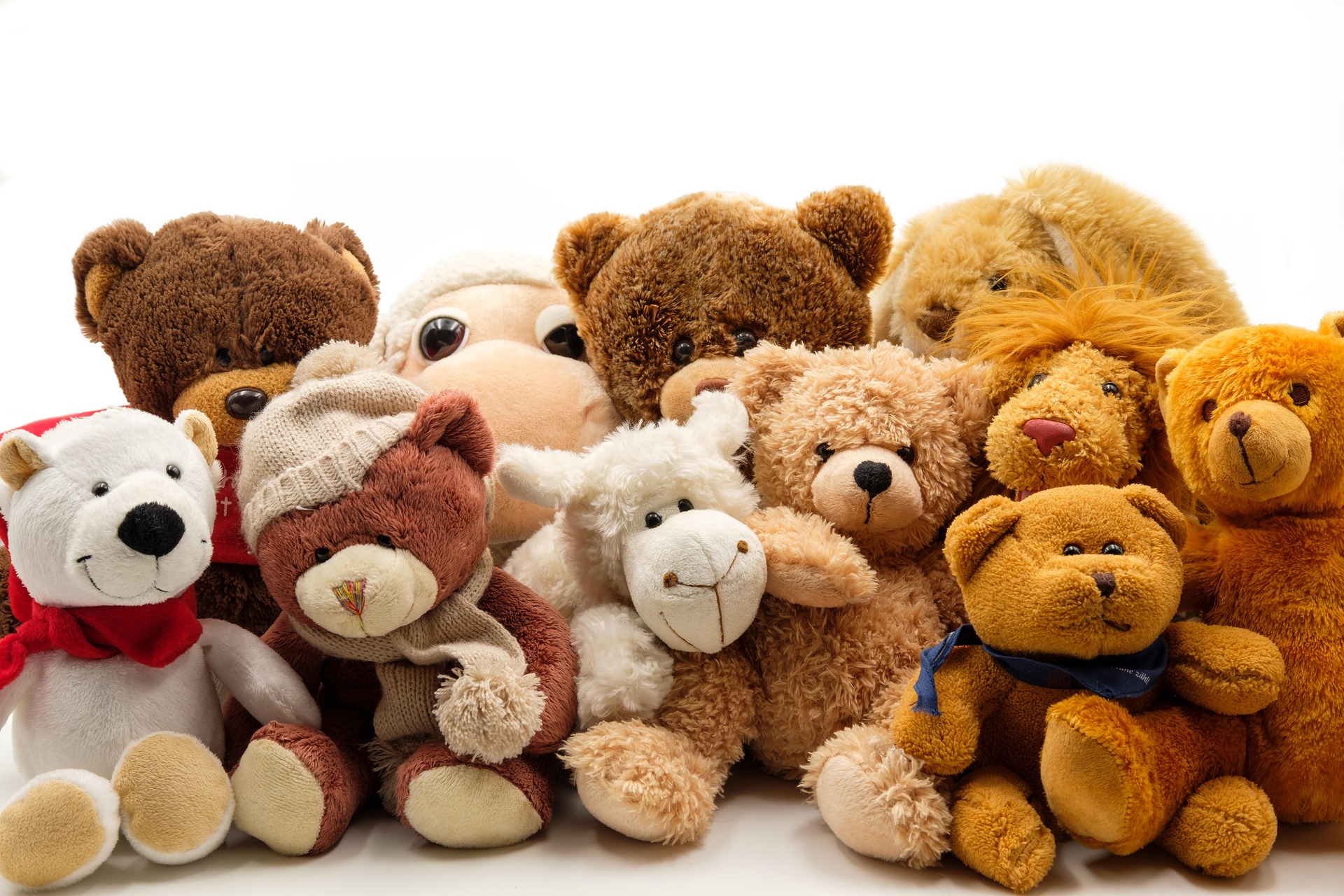
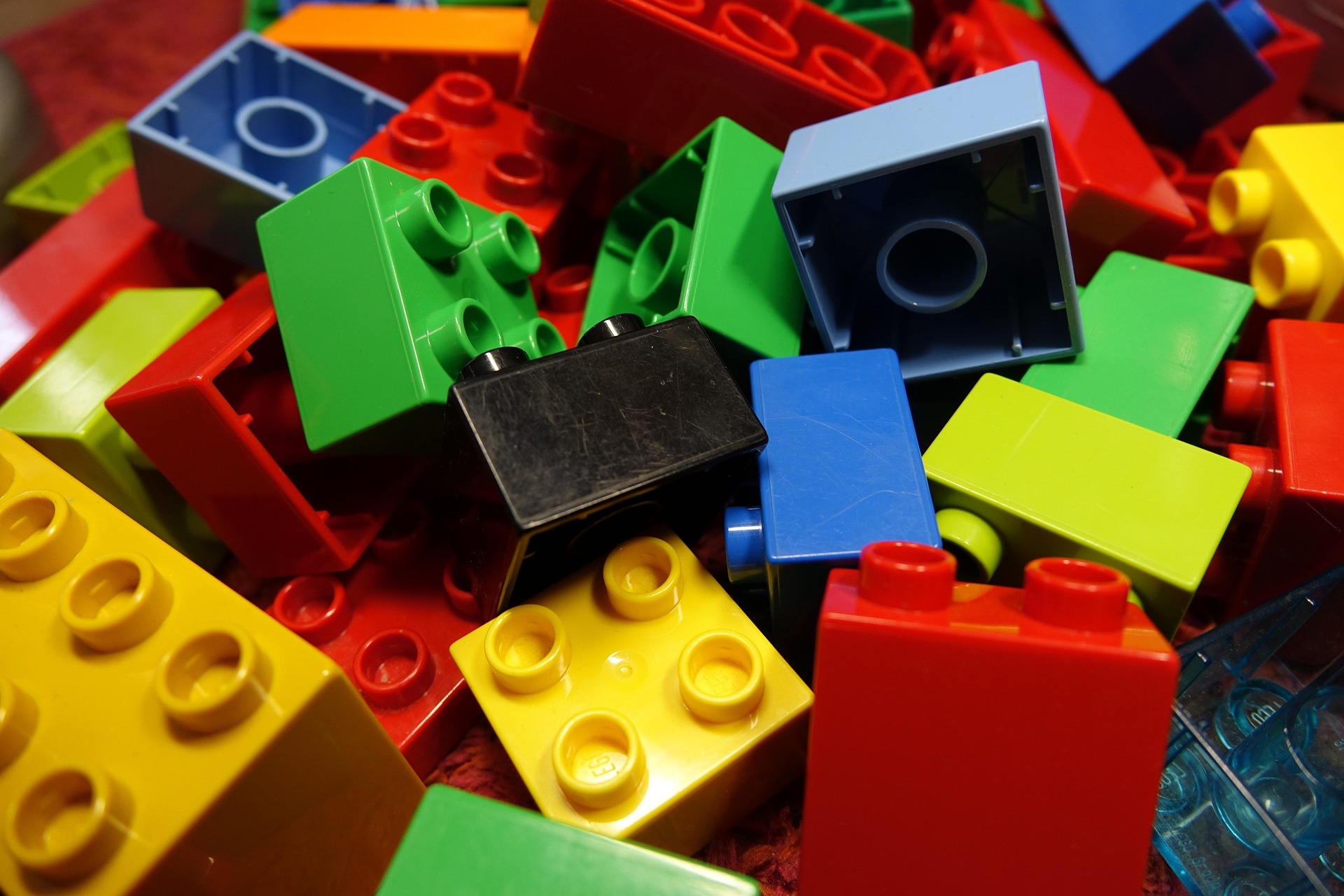
Lots of things are made of plastic, from your hard toys to even the fabric that makes up your cuddly bears!
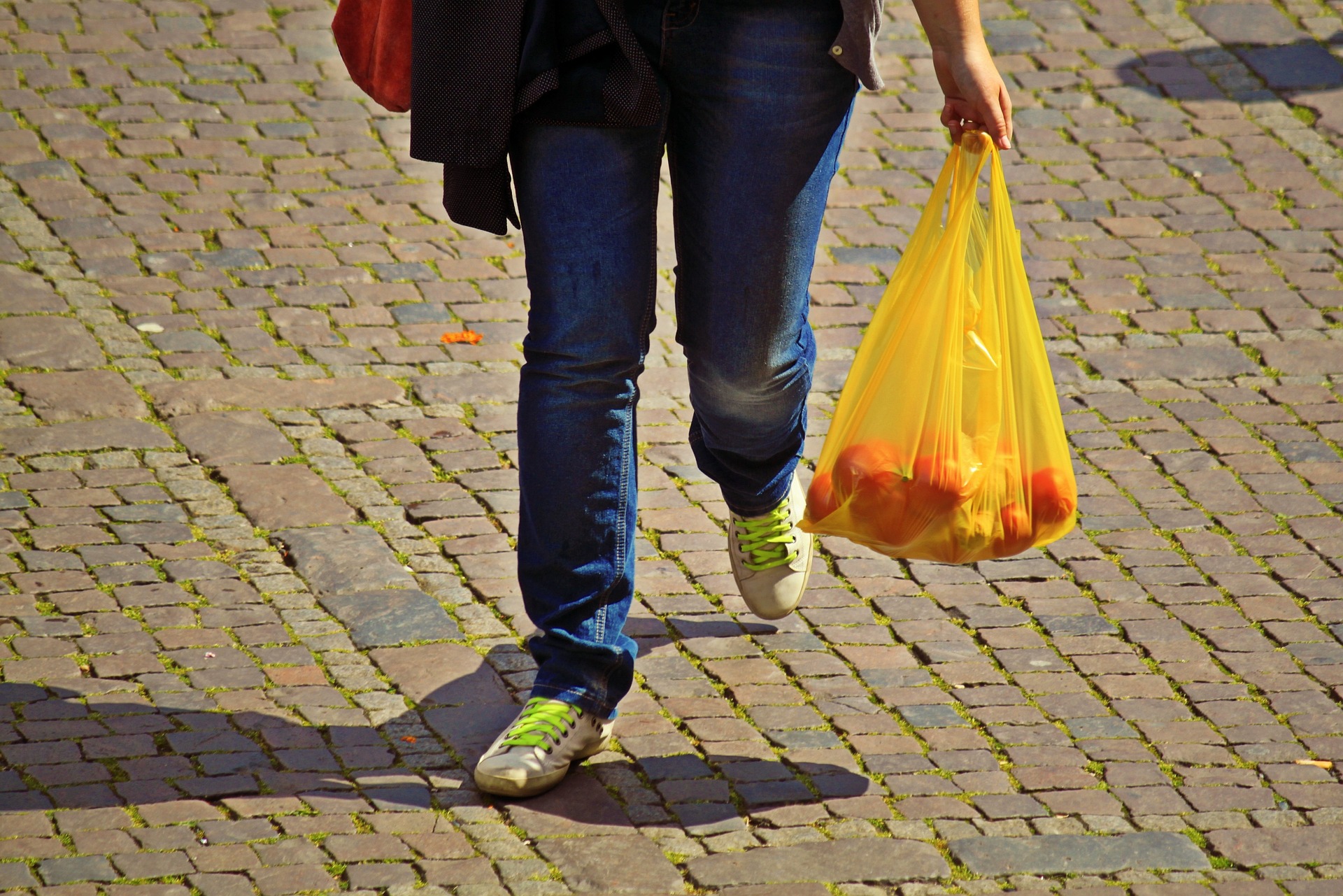
If you zoom really really really far into some plastics, you would see lots of tiny strands. Like hair or spaghetti, these very long chains called polymers. These chains sliding over each other allow some plastics to be bendy and stretchy (like a plastic bag).
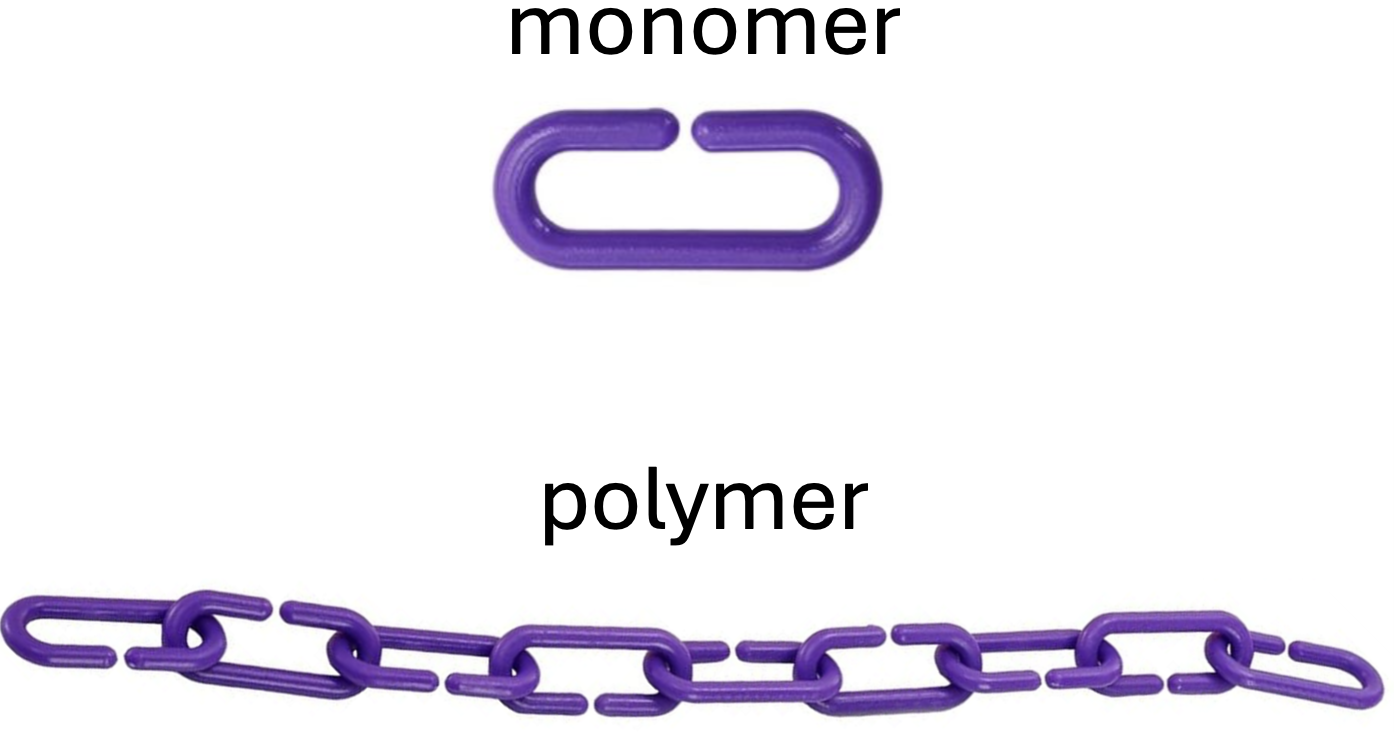
Each of the polymers, are made up of very small sections that repeat over and over again. These are called monomers.
In order to make the plastics harder, these long polymer chains need to be tied together to look a bit like a net. This is called cross linking (shown below)
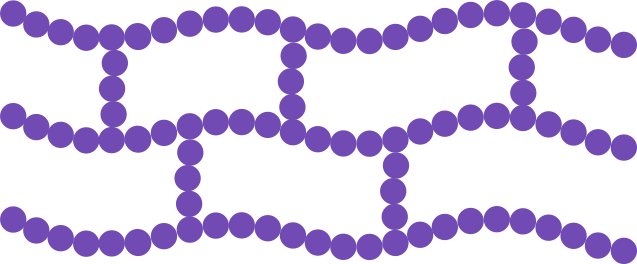
In order to demonstrate this, you can buy some toy chain links to be monomers and the children can link these together to make polymer chains. They can then link these together further to create a net to demonstrate cross-linking.
How does slime work
The first component of slime is PVA glue. This is a plastic called (polyvinylalcohol). It’s a polymer that’s been mixed into water (dissolved).
The second main component is a special solution, that causes the PVA glue to cross-link to itself. This turns the PVA from being sticky to having the touch and feel of slime.
How to make slime
What you need
- PVA glue
- slime activator (Elmers magic liquid)
- Plastic beakers (or cups)
- Plastic pipettes (not necessary but easier to control how much is added)
- Glitter
- Food colouring
- Spoon to mix
Health and Safety
Remind the children that they are doing a science experiment so they should be careful and sensible. Also, they shouldn’t eat anything. The things they are using are safe to touch but shouldn’t be eaten. They will also need to wash their hands afterwards.
Activity: making slime
- Get the children to spread out so that each has a bowl and spatula.
- Explain to them that they going to be using PVA glue which is polyvinylalcohol. It’s a polymer that’s been mixed into water (they won’t know the term dissolved).
- Help them pour some PVA into their pot until it’s got about 2-3 tablespoons in (a big dollop).
- Let the children choose a colour of glitter and mix a bit into their PVA glue.
- Add a bit of the “Elmers magic liquid” to the pot. Mix well with the spatula. Then add a bit more. Keep doing this until the PVA glue has gone stretchy and turned into slime.
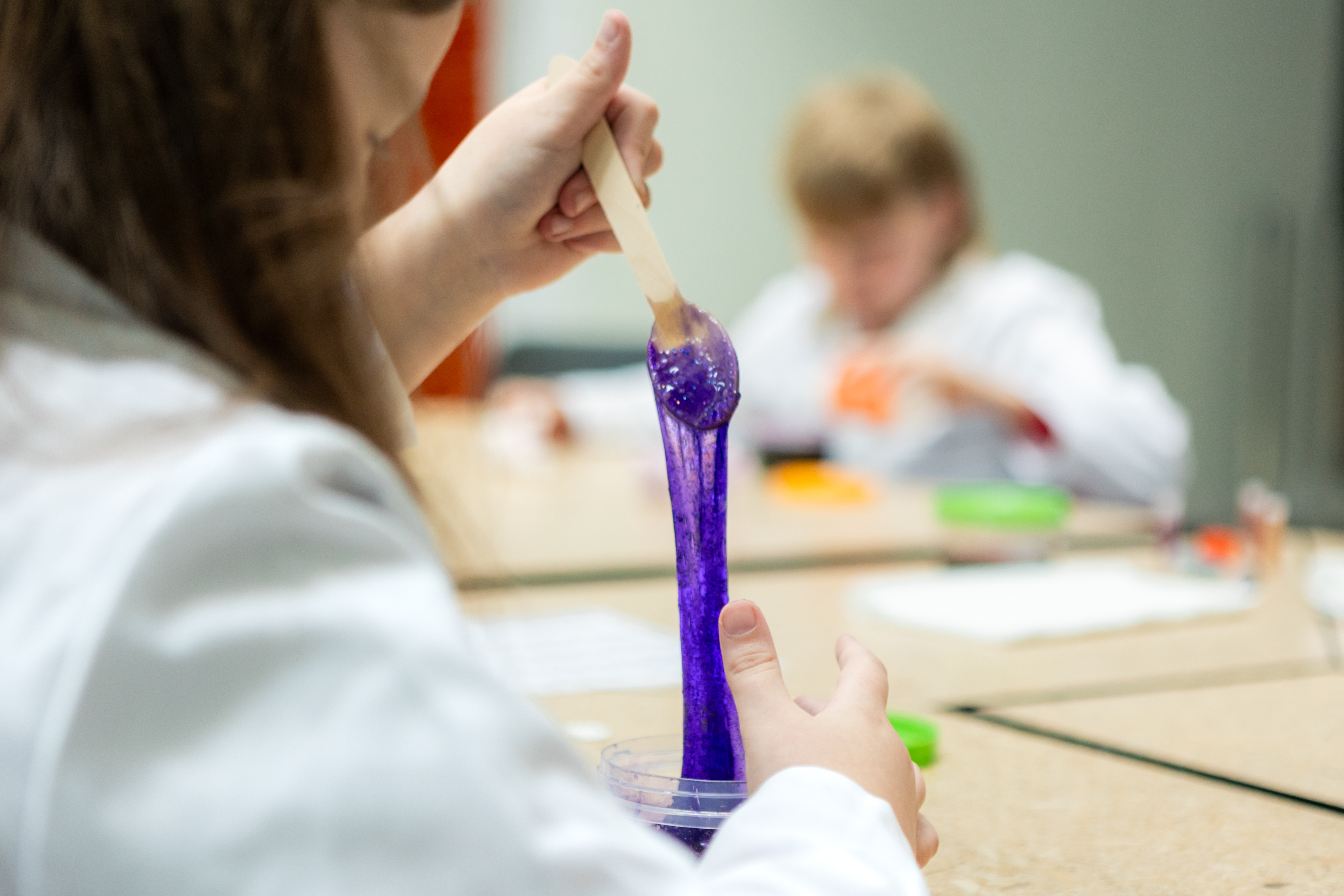
Stock Images from Pixabay. Diagrams made internally. Slime photo curtsy of Greg Milner Studio.

This work is licensed under the Creative Commons Attribution 4.0 International License. To view a copy of this license, visithttp://creativecommons.org/licenses/by/4.0/

